Two Ranchos, Two Histories in the Making of Southern California
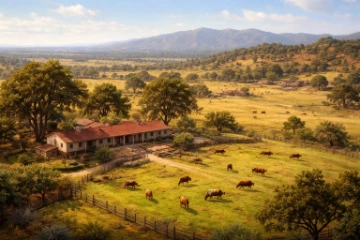
Granted to Juan Temple in 1844, Rancho Los Cerritos encompassed roughly 27,000 acres of the Los Angeles basin, sustained by a cattle economy that supplied hides and tallow to Boston trading ships. Temple's Monterey Colonial adobe, completed that same year, anchored a working rancho that collapsed under debt by 1866, when Flint, Bixby and Company assumed control and shifted operations toward sheep ranching. American land tenure reshaped the property's scale and purpose entirely.
Older in its documented Indigenous associations, Rancho Los Alamitos sits on land long occupied by the Tongva people before Spanish missionaries and Mexican administrators imposed successive land grants beginning in 1784. The Bixby family, who consolidated ownership in the 1880s, transformed the property into a prosperous agricultural estate. Their stewardship, extending into the twentieth century, produced the gardens and structures visitors encounter today. Each site carries layered histories that resist simple narratives of progress or decline.
What Visitors See Today in the Adobe Homes and Gardens
Both sites admit visitors free of charge, a deliberate commitment to making local heritage accessible rather than exclusive.
The Adobe Homes as Interpretive Spaces
Period rooms at Rancho Los Cerritos and Rancho Los Alamitos reconstruct domestic life across successive occupancies – Tongva habitation, Mexican rancho culture, and Anglo-American settlement. The Cerritos adobe, a two-story Monterey Colonial structure built in 1844, retains original architectural fabric that few Southern California adobes can claim. Rancho Los Alamitos presents a more layered domestic interior, with rooms reflecting the Bixby family's early twentieth-century occupancy alongside earlier rancho-era interpretation.
Gardens as Curated Memory
Designed by the Olmsted Brothers firm beginning in 1926, the Los Alamitos gardens organize heritage through horticultural choices as much as planting beds. At Los Cerritos, restored gardens reference agricultural and ornamental traditions tied to the rancho period, grounding aesthetic experience in historical context rather than simple beautification.
Planning a Visit for Families, School Groups, and First-Time Visitors
Both sites offer free admission, making them genuinely accessible for families and educators working with limited budgets.
Getting There and Checking Hours
Rancho Los Cerritos is located at 4600 Virginia Road, Long Beach; Rancho Los Alamitos sits within Cal State Long Beach's campus at 6400 Bixby Hill Road. Hours and tour availability shift seasonally, so checking each site's official website before arriving is essential. Parking is available at both locations at no charge.
Advice for Families and School Groups
Children respond well to the gardens and open grounds, where movement is natural and unhurried. School groups should contact staff in advance to reserve docent-led tours, which frame the adobe architecture and rancho-era land use in age-appropriate terms. Preparing students with basic context about California's Mexican and Indigenous history beforehand makes the experience considerably richer. Respectful conduct in preserved historic spaces should be discussed before arrival.
These Ranchos Keep Regional History Tangible
Preserved adobe walls and century-old gardens can only do so much on their own – what makes Rancho Los Cerritos and Rancho Los Alamitos genuinely valuable is that both sites translate Southern California's layered past into something a visitor can actually stand inside. Free admission removes the barrier that keeps so many heritage sites from reaching the communities whose histories they hold. Together, the two ranchos carry forward stories of Tongva land, Spanish and Mexican land grants, American agricultural enterprise, and the labor of people who rarely appeared in the official record. Approaching either site not merely as a pleasant afternoon stop, but as an interpretive space where that full history is made visible and legible, is how these places repay serious attention.