North and Inland Long Beach – Bixby Knolls, California Heights, Los Cerritos, and Wrigley
Pull back from the waterfront and Long Beach shifts into something quieter and more residential. These four neighborhoods occupy the city's northern and inland sections, each with distinct housing character and solid freeway access.
Bixby Knolls
Positioned near the northern edge of Long Beach, Bixby Knolls centers on Atlantic Avenue, where independent restaurants and small retailers line a walkable commercial strip. Housing here runs mostly to mid-century single-family homes, many well-preserved. Scherer Park anchors the neighborhood's green space.
California Heights
A Historic Preservation Overlay Zone covers much of California Heights, protecting its Craftsman bungalows and Period Revival homes from the 1920s and 1930s. Situated east of Bixby Knolls, the area is primarily residential with little commercial activity.
Los Cerritos
Estate-style properties and generous lot sizes define Los Cerritos, which sits near the Rancho Los Cerritos Historic Site on Virginia Road. Housing stock here trends larger and older, with tree-lined streets reflecting an earlier era of Long Beach development.
Wrigley
Wrigley runs along the western side of Long Beach, bordered by the Los Angeles River and close to the 405 and 710 freeways. Housing is a mix of modest single-family homes and duplexes. Wrigley Community Park serves as the main open space.
Coastal and Central Areas – Belmont Heights, Downtown, and Naples
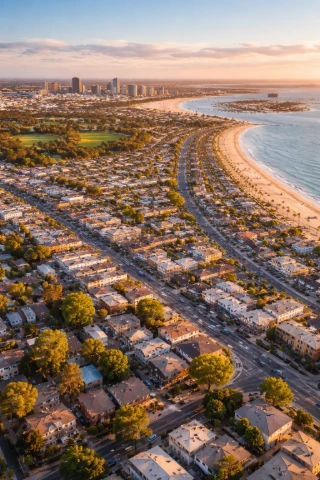
Three neighborhoods that often get compared, these areas sit closer to the water or urban core than the inland districts, and each offers a noticeably different relationship to density, walkability, and the shoreline.
Belmont Heights
Positioned east of Downtown near Ocean Boulevard, Belmont Heights mixes craftsman bungalows with apartment buildings from the mid-20th century. Recreation Park sits just north, offering tennis courts, a golf course, and open green space. Fourth Street serves as the main retail corridor, lined with independent restaurants and shops.
Downtown Long Beach
High-rises, mixed-use towers, and converted lofts define the housing stock here. Pine Avenue anchors the commercial core, running toward the waterfront and the Long Beach Convention Center. The area draws residents who prioritize transit access and urban density over quiet streets.
Naples
A small island community in Alamitos Bay, Naples is organized around a network of canals crossed by arched pedestrian bridges. Housing runs toward single-family homes and waterfront properties. Gondola rides on the canals remain a recognizable local fixture.
Signal Hill and What to Compare Across Neighborhoods
Technically its own city, Signal Hill sits entirely surrounded by Long Beach – a distinction that affects everything from property taxes to school district boundaries and city services.
Signal Hill
Elevated above the surrounding flatlands, Signal Hill offers panoramic views of the Los Angeles Basin and, on clear days, the San Gabriel Mountains. The housing stock ranges from hillside single-family homes to mid-rise condos near Cherry Avenue and 19th Street. Hilltop Park marks the site of the 1921 oil discovery that shaped the city's identity, and scattered pump jacks still dot the terrain.
When comparing all eight areas covered here, consider commute access, housing type, walkability, park proximity, and whether you want a residential, urban, or waterfront setting. Visiting each neighborhood in person and comparing active listings side by side will give you a clearer read than any guide can.
The Right Long Beach Area Depends on Your Priorities
Eight neighborhoods, one city – and Signal Hill standing apart as its own incorporated municipality. What you prioritize shapes everything. Bixby Knolls and California Heights draw buyers who want craftsman housing stock and walkable commercial strips. Los Cerritos and Naples suit those chasing waterfront access or quiet residential streets. Wrigley offers affordability closer to the 405 corridor. Belmont Heights balances beach proximity with older architectural character. Downtown serves renters who want density, transit, and cultural activity within walking distance. Comparing these areas across location, housing style, parks, main streets, and landmarks gives you a practical framework – use those factors to narrow your search rather than waiting for one neighborhood to declare itself the obvious choice.