How to Read Street Sweeping Signs Without Guesswork
Posted signs contain more information than most drivers actually read. A typical curb sign specifies the day of the week, the exact time window – say, 8 AM to 10 AM – and sometimes a seasonal range like April through October. Miss any one of those details and you're looking at a ticket.
Breaking Down What Signs Actually Say
Arrows on signs indicate direction – they point toward the stretch of curb the restriction covers, not the entire block. Common mistakes include assuming one sign governs the whole street, ignoring temporary orange postings taped below permanent signs, and overlooking permit-only overlaps that apply simultaneously.
When Signs Conflict or Seem Unclear
Temporary postings always take priority over permanent signs. If two signs appear to contradict each other, the more restrictive rule applies. Photograph the signs before leaving your car – that timestamp can matter if you contest a ticket.
How to Find Your Official Sweeping Schedule and Spot Holiday Changes
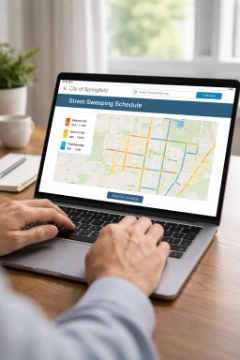
Your city's official website is the only reliable source – neighborhood apps and old screenshots get people ticketed constantly.
Using the City's Address Lookup Tool
Most municipalities offer an interactive map or address-based search through their public works or transportation department portal. Enter your full street address, confirm the route number assigned to your block, and note the specific day and time window listed. Don't assume the neighboring block shares your schedule – routes often split mid-street.
Checking for Holiday and Service Exceptions
Schedules shift for federal holidays, heavy snowfall, and post-winter maintenance cycles. After any disruption, sweeping typically resumes the following service day rather than the original date. Check your city's official notifications page or sign up for email alerts directly through the municipal portal. Reproducing specific dates here would be misleading – schedules change, and the official source always reflects the current version.
Know the Parking Rules Before Sweeping Day Arrives
Leaving a car in a posted sweeping zone is a reliable way to start the morning badly. Most cities issue tickets automatically, and some add towing if the vehicle blocks sweeper access.
General Ticket Information
Fine amounts vary by city and change regularly, so check your local parking authority's official website rather than relying on any fixed figure listed elsewhere. Towing fees compound quickly, often exceeding the original fine by a wide margin.
Residential Permit Parking Basics
Permit zones restrict overnight parking to residents, but a permit does not override temporary no-parking signs posted for sweeping. When both rules apply simultaneously, the stricter one wins.
Night-Before Checklist
Check posted signs for tomorrow's date. Confirm your street's schedule through the city's official tool. Move the vehicle before the posted start time, not after.
A Few Minutes of Checking Can Save a Ticket
Read every posted sign before you park, confirm the schedule through your city's official sweeping tool, and always check whether a holiday exception applies that week. Residential permit parking does not override sweeping restrictions – that's a common and costly assumption. Schedules shift seasonally, and cities update them without much fanfare, so a route that ran Tuesdays last spring may run Wednesdays now. Staying current protects your vehicle from a fine and keeps municipal sweeping effective – clean streets depend on cars actually moving when the sweeper arrives. When in doubt, go directly to your city's official website rather than relying on third-party apps, which can lag behind real-time changes.